
Running Club Event Ideas: Building a Calendar That Turns the Boom Into Regulars
Running club event ideas for organizers: beginner runs, themed nights, socials, and signature events that turn the run club boom into members who stay.
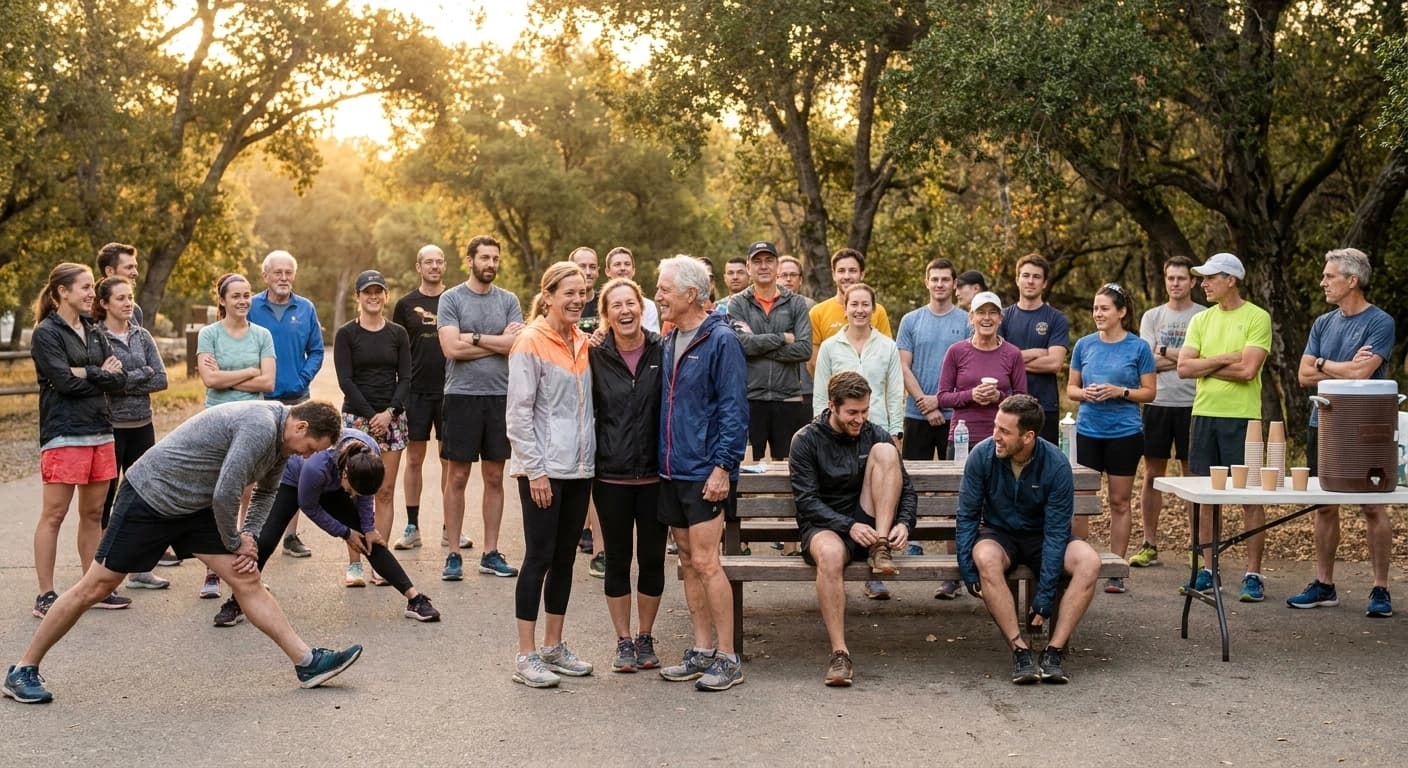
The run club boom is real, and it is showing up at your trailhead. Strava's 2025 Year in Sport report found that running clubs on the platform grew 3.5 times over the prior year, and that 37 percent of the people surveyed now see a run club as a good place to meet others. New faces are walking up to your group run who never would have a year ago.
Here is the part nobody warns you about. Getting them in the door is the easy half. A single standing Tuesday run does not keep a first-timer coming back. They showed up once, ran three awkward miles, and then their calendar went quiet. What retains a newcomer is a reason to return that feels different from last week, and that reason is your event calendar.
The same Strava report gives away the answer. Club-organized events rose 1.5 times year over year in 2025, a 50 percent jump. The clubs winning the boom right now are not the ones that opened the door and waited. They are the ones that actually programmed a calendar. This post is a real menu of event ideas you can build from, organized so you can start small without drowning in logistics.
Why your event calendar is the real retention engine
Think about the difference between a club and a standing appointment. A standing appointment is one run at one time, every week, forever. It works for the ten people who were already committed. It does very little for the person who came once, felt like an outsider, and never found a second reason to show up.
A calendar is a promise that something is always coming. It says there is a beginner night next week, a sunrise run at the end of the month, a post-run breakfast the club has been talking about. That forward motion is what turns a curious first-timer into a regular, and a regular into a member who brings a friend.
The data backs the instinct. When club events grew 50 percent in 2025, the clubs that captured the surge were the ones giving people repeated, varied reasons to come back. One recurring run is not a calendar. A first-timer needs a next reason within a week, while the club is still fresh in their mind, not a month later when they have already moved on.
Beginner-friendly entry events, the on-ramp for the newcomers
Most of the people the boom is sending you are nervous. They are not worried about their splits. They are worried about being the slowest person there, getting dropped on a corner, and running the last mile alone while everyone else finishes. Your first job is to design that fear out of the experience.
A few event types do this well:
- The no-drop welcome run. A short, easy-pace run where the explicit rule is that nobody runs alone and nobody gets left behind. Assign an experienced member to sweep the back.
- A couch-to-5K start block. A recurring beginner run tied to a simple progression, so a total newcomer has a clear on-ramp and a group moving at their level.
- A bring-a-friend night. Lower the stakes by letting people show up with someone they already know. The buddy makes the first visit feel safe.
The point of an entry event is not the run. It is the message that this is a place where a nervous first-timer belongs. Make that first event feel social and supported, not competitive, and you have earned the second visit.
Themed and seasonal runs that give a reason to show up again
Once someone has come twice, novelty keeps them. A themed run takes the same weekly slot and gives it a fresh hook, so the run never goes stale for the people who keep coming.
The menu here is deep and low-lift:
- Sunrise runs for the early crowd, finished with coffee as the town wakes up.
- Full-moon runs that make a weeknight feel like a small adventure.
- Costume runs around a holiday, where the point is the photos as much as the miles.
- Local-landmark tours that route the group past a mural, a bridge, or a neighborhood people have never run through.
- Seasonal runs tied to the calendar, a turkey trot shakeout, a first-day-of-summer run.
The trick is to keep it light. A theme is a hook, not a production. You do not need a budget or a permit for a full-moon run. You need a route, a time, and a name that makes people want to tell someone about it.
Social events off the road that build the community
Here is a truth most organizers learn late. The belonging does not happen on the road. It happens at the table afterward, when people are catching their breath, laughing about the hill, and learning each other's names. The runs bring people together. The socials are what make them stay.
Build a few of these into your rhythm:
- Post-run coffee or breakfast as a standing option, so the run has a natural second act.
- A shakeout-and-social, an easy run followed by drinks or food, aimed more at hanging out than at training.
- Milestone celebrations, a small shout-out for someone's first 5K, their 100th club run, or a race they just finished.
These are the events that quietly do the most work. They turn attendees into members, and members into the people who invite others. A newcomer who runs with you is a maybe. A newcomer who has laughed with your club over breakfast is a regular.
One signature annual event your club becomes known for
Every club that has real staying power has one event it is known for. It is the thing members mark on their calendar months out and the thing they describe when a coworker asks what their run club is like.
A signature event can be simple:
- An anniversary run that marks the club's founding, with everyone who has ever been a part of it invited back.
- A club charity run that gives the miles a purpose beyond fitness.
- A members-only relay or fun race that gets a little competitive in the friendliest way.
A signature event does three things at once. It gives your club an identity, it creates a natural recruiting moment when the community is at its most visible, and it becomes your best content and word-of-mouth engine for the entire year. One great annual event will do more for your reputation than fifty ordinary Tuesdays.
Planning events without drowning in the logistics
Now the honest part. Programming a calendar sounds great until you are the one doing it. The real work of an event is not the idea. It is the RSVPs, the headcounts, the route sharing, and the reminders, and for most clubs that work is spread across five different tools. Strava for the activity, a group chat for the questions, Google Forms for the signup, a separate email for the reminder, a spreadsheet to reconcile who is actually coming.
That fragmentation has a cost, and it lands hardest on exactly the people you are trying to keep. A first-timer who cannot figure out where the run starts or what time to be there does not ask. They just do not come. Every tool you make them chase is a chance to lose them before they ever arrive.
This is where a purpose-built platform earns its place. A generic option like Meetup can post an event, but it is a dated listing tool that knows nothing about your roster, your routes, or your recurring runs. RunLink keeps the event, the mapped route, and the RSVP in one place, with club chat next to them for day-of updates, so the organizer stops being the integration layer and a newcomer always knows exactly where and when to show up. If you want the wider playbook on turning that infrastructure into headcount, our guide on growing your club walks through it.
A simple quarterly event calendar to start
You do not need to launch all of this at once. The clubs that burn out are the ones that try to staff a giant calendar in month one. A workable rhythm is smaller than you think: keep your weekly core run, add one themed run and one social each month, and build toward one signature event per quarter.
Here is a starting frame:
| Event type | What it does | Cadence |
|---|---|---|
| Core group run | The reliable anchor everyone builds around | Weekly |
| Beginner welcome run | The safe on-ramp for newcomers | Every 2 weeks |
| Themed run | Fresh reason to return to the same slot | Monthly |
| Post-run social | Where belonging actually happens | Monthly |
| Signature event | The identity and recruiting moment | Quarterly |
Start with one new event type a month. Get the beginner run right before you add the themed night. A calendar you can actually staff beats a beautiful one that collapses in week three.
The boom handed you the hardest part for free, which is people walking up who want to belong somewhere. Your calendar is what decides whether they stay. Build it one event at a time.
RunLink gives you one place to plan events, share routes, and collect RSVPs, so you can spend your energy on the runs instead of the spreadsheets. Set up your club for free and start building the calendar that keeps your new members coming back.
Run your club in one app
RunLink gives a running club a public club page, events with a mapped route and RSVPs, a roster with roles, and club chat in one place. The iOS app is free to download.
Related Posts
No-Drop Running Club Pace Groups: How to Keep Everyone Together as Your Club Grows
A no-drop pace group policy is how you keep new runners from quietly leaving. Here is how to structure pace groups so your club grows without splintering.
Halloween Run Club Event: Plan a Costume Run That Recruits
A Halloween run club event is the easiest bring-a-friend run of the year. How organizers set the time, route and costume rules, then follow up after it.
Running Club Holiday Events: Plan December in October
Running club holiday events go better when the founder plans in October: which December Saturdays to use, three events worth running, and the January handoff.