
Run Club Collab: How to Plan a Joint Run With Another Club
A run club collab puts two clubs on one route. How to pick a partner, split the work, set the route and pace, and turn guests into members.
What is a run club collab?
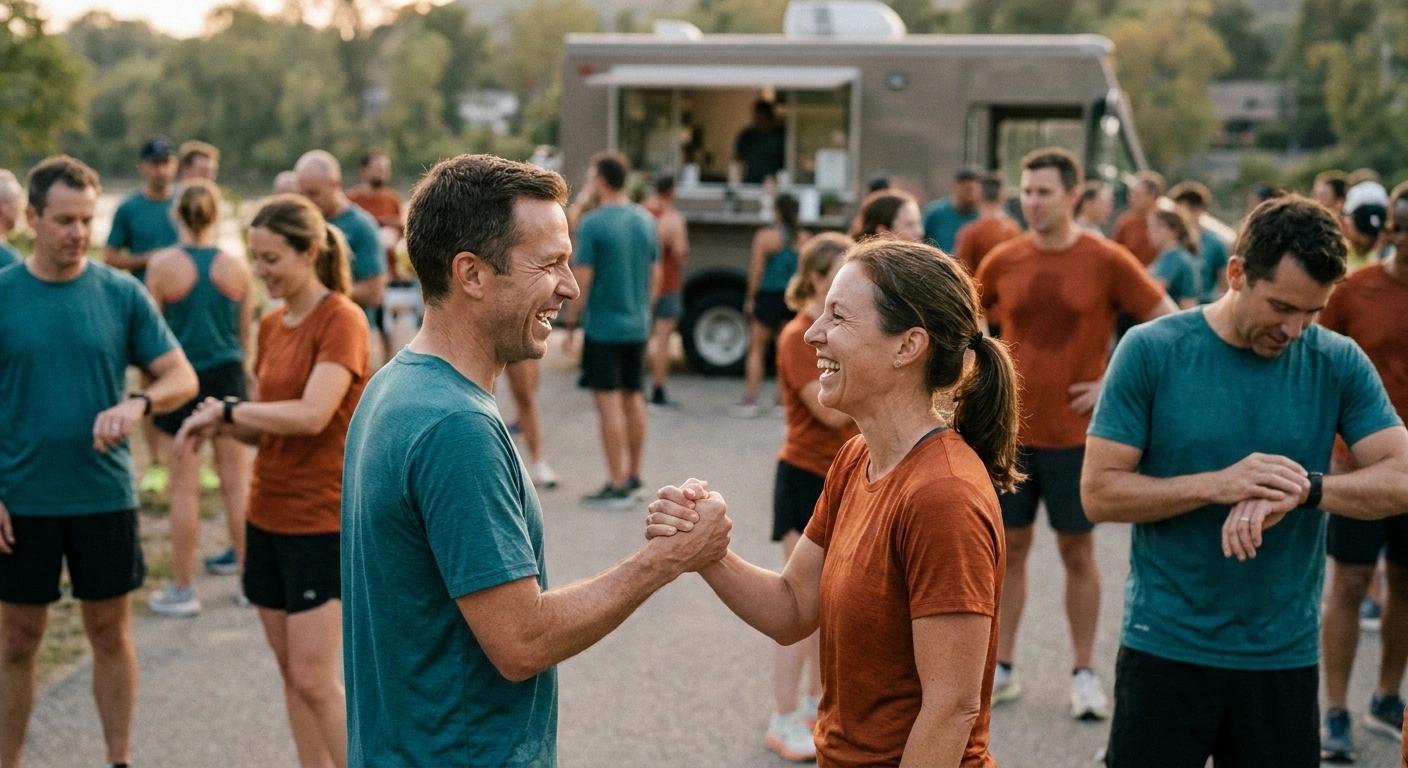
A run club collab is one group run hosted by two clubs together: one route, one start time, one post-run spot, promoted by both clubs to their own members. Each club meets runners it would never have reached on its own, and both rosters leave with a few new faces.
The catch: a collab doubles the people in the parking lot and halves the clarity about who is in charge. Two founders, two group chats, two sets of habits, and guests who know neither club well. Done loosely, it is a fun night that grows nobody. Done with a little structure, it is one of the cheapest ways to grow a run club there is.
This guide is for the organizer planning one: how to pick the partner, who owns which job, how to promote it on both sides, and what happens the week after, which is where the growth actually comes from.
Why do run clubs co-host runs with other clubs?
Because the hardest part of growing a club is getting in front of runners who already like running with a group. A partner club's regulars are exactly those people. They already show up on weeknights, already know how a group run works, and are already open to a new crowd if the vibe fits.
There are a few other reasons founders say yes to a collab:
- Reach without ads. Each club promotes the run to its own members and followers. Nobody pays for anything, and the audience is pre-qualified.
- Variety for your regulars. A new route and a different crowd break up the weekly loop. That matters most in a slow season, when turnout dips and the same eight people start to feel like a closed group.
- Shared load. Two clubs means two sets of run leaders, sweeps and hands for the post-run. A big themed run that would burn out one founder is manageable for two.
The pattern is common enough that the big platforms build for it. Strava's club events guide says each event supports one co-host, two clubs total, that co-hosted events cannot be recurring, and that they must be open to everyone rather than member-only (per verified.strava.com, read November 17, 2026). That last rule is a good instinct for any collab, on any tool: if guests cannot get in, it is not a collab.
How do you pick the right club to collab with?
Not every friendly club is a good partner. The collabs that work have overlap where it matters and difference where it helps.
Overlap on pace and distance. If your club runs a social 5K and theirs runs a hard 10-miler, someone has a bad night. Look for a club whose typical turnout runs a similar range, or plan a route with a clean short option so both groups are covered.
Compatible vibe. A social club that ends at a coffee shop and a workout club that runs intervals on a track can collab, but only if the format is chosen on purpose. Decide together whether this is a social run, a long run or a themed event before anyone posts it.
Nearby, but not the same territory. The best partner is close enough that their members will travel for the run, but far enough that you are not already sharing the same runners. A club from the other side of town, a club that meets on a different night, or a club tied to a cafe, brewery or running store in another neighborhood are all good fits.
A quick test before you commit: ask the other organizer what their typical turnout is, what pace range they cover, and how they handle a runner who falls off the back. If the answers sound like yours, you have a partner.
How do you split the work on a joint run?
Two clubs running one event is where things fall through the cracks. Every job needs exactly one owner, written down where both founders can see it. A shared note is enough. The jobs:
- Route. One club owns the course, usually the host club whose territory you are running in. They pick it, run it in advance, and choose the regroup corners.
- Safety and sweep. Agree on a lead runner and a tail runner from each club before the day. Mixing them, one leader from each club at the front and back, also helps guests feel looked after by both sides. If your run leaders need a refresher, the basics of leading a group run apply double here.
- The start brief. One person gives it, not two. Route, regroup points, the short option, where the post-run is, and a quick hello from both founders.
- The post-run. One club books the spot and makes sure there is room for the combined group.
- Photos and the recap. One person takes photos, and both clubs get them the same night.
Two expectations should be settled before the day, not at the start line.
Pace coverage and no-drop. If either club runs no-drop, meaning nobody is left behind, the joint run is no-drop. Agree on how many pace leaders you need and where the regroups are.
Waivers and insurance. If either club carries insurance or uses a waiver, figure out whose policy covers a co-hosted run and whether guests from the other club need to sign anything. Platforms differ here: Strava's guide says its waivers apply at the club level and that people under 18 cannot accept them (per verified.strava.com, read November 17, 2026). Check your own policy and your partner's. RunLink does not collect waivers, so this part lives wherever your club already handles it.
How do you promote a collab run to both clubs?
The rule is simple: same date, same start, same route, same wording, on both clubs' channels. Write the announcement once, agree on it, and both founders post it. Conflicting details across two group chats are how half the guests end up at the wrong trailhead.
A few things make the announcement work:
- Name both clubs in the title. Guests decide to come because of the club they already know.
- Say who it is for. "All paces, short option available, no-drop" tells a nervous runner from the other club they will not be left behind.
- Post the route ahead of time. Runners who have seen the course arrive calmer, and the briefing gets shorter.
- Cap it if the start is small. A collab can easily draw twice your normal turnout. If the meeting spot or the post-run venue cannot hold that, agree on a limit up front. Our guide to capping RSVPs for a busy run covers how to pick the number.
Here is where RunLink fits, briefly. Each club can post the collab as an event on its RunLink club page with RSVPs, and attach the route by drawing it on a map, so runners from both sides see exactly where the run goes before they show up. RunLink has no co-host feature, so if both clubs use it, each posts the event on its own page with the same details. Member invites in RunLink bring people into a club, not to a specific event, so share the event with your partner club through their usual channels.
How do you turn collab guests into members?
This is the part most clubs skip, and it is the whole point. A collab is only growth if the guests can find you and join you the next day. The run itself is the introduction. The week after is the conversion.
Make your club easy to find. Before the run, check that your club has one obvious home online: a club page with your regular schedule, where you meet, and how to join. When a guest searches for you the next morning, that page is what they find. A public club page and the rest of what a club admin gets on RunLink exist for exactly this moment.
Say your next run out loud. At the start brief and again at the post-run, tell guests when and where your club runs next. Most guests will not dig for it.
Welcome them the same night. A short thank-you in your group chat, with photos and the date of your next regular run, gives guests a reason to stay in the loop. If someone joined your club that night, a direct hello from the founder goes further than any post.
Treat them like first-timers, because they are. Collab guests behave exactly like any first-time visitor: curious, a little unsure, and likely to drift away if nobody follows up. The same habits that work for turning first-timers into members work here.
Plan the return run. The best collabs come in pairs. If you hosted this time, the next one is at the partner club's spot. It gives your members a reason to travel, keeps the relationship even, and gives both clubs a second shot at the guests who almost joined.
None of this needs a big system: one place where a curious runner can find your club, and one person who remembers to follow up. That is most of managing a running club anyway.
FAQ: run club collabs
How often should a club do a collab run?
Occasionally. A few times a year keeps it special and keeps your own regular runs at the center of the club. A collab every week turns into a merged club, which is a different decision.
Can a co-hosted Strava event repeat weekly?
No. Strava's club events guide says co-hosted events cannot be recurring (per verified.strava.com, read November 17, 2026). Post each collab as its own event.
Who handles safety on a joint run?
Agree on one lead and at least one tail runner before the day, ideally one from each club, and name them at the start brief. The host club usually owns the route and the regroup corners.
Does a collab need a waiver?
It depends on each club's insurance and how it already handles waivers. Check both policies before the run, and decide whether guests from the partner club need to sign anything.
Ready to give your club one home?
A collab brings new runners to the start line. Whether they come back depends on how easy your club is to find the next day. RunLink gives your club a public page, events with RSVPs and a drawn route, a member roster with roles, and group chat in one place. Claim your club on RunLink, and point your members to the iOS app, which is free to download.

Run your club in one app
RunLink gives a running club a public club page, events with a mapped route and RSVPs, a roster with roles, and club chat in one place. The iOS app is free to download.
Related Posts
How to Pick a Goal Race for Your Running Club
Fall race season is filling up. How to pick a goal race your whole club can train for, and use it to keep members showing up all season.
How to Choose a Running Club Meeting Spot People Return To
How to choose a running club meeting spot: parking, restrooms, light, a landmark nobody can miss, and the one rule for changing it without losing people.
Strava Verified Club Badge: Should Your Run Club Apply?
The Strava Verified Club badge needs 100+ members and weekly posts. What it gives a run club, who qualifies, and what to build before you apply.