
Running Specialty Store Partnership: How Clubs Do It Right
A running specialty store partnership can give your club a home base, gear nights and new members. Here is what the store wants and what to put in writing.
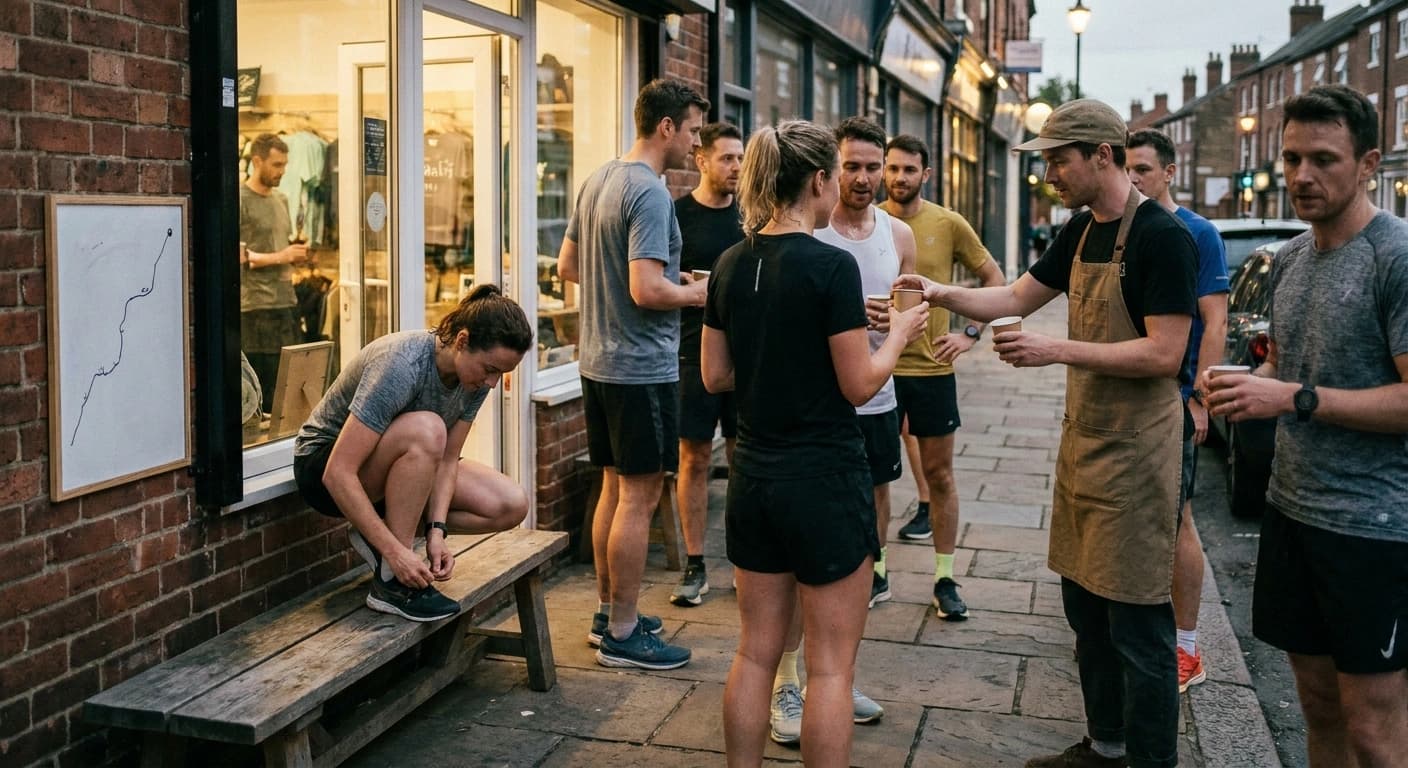
For years the conversation went one way. The club founder walked into the local running store, asked the manager for a sponsorship, and hoped for a banner and a discount code. Today the store is often the one asking. Running stores want run clubs, and they want them badly.
This post is for the founder, president or partnerships lead of a club that meets near a running store, or wants to. It covers what your club should ask for, what you owe in return, and the few lines you need in writing so the club stays yours. If you are working on growing your club, a good store partnership is one of the most useful levers you have.
What is a running specialty store partnership?
A running specialty store partnership is a standing arrangement where a local running store gives a run club a home base, perks for members, and gear or event support, and the club gives the store a reliable weekly crowd of exactly the customers it wants. It is not a cash sponsorship, and money rarely changes hands. The best ones fit on one page, so both sides know who owns what. That is the part most clubs skip.
Why do running stores want your club right now?
The trade press is saying it out loud. In a January 20, 2026 column, Running Insight, the trade magazine for running specialty retailers, noted that some running stores have tapped the run club explosion by partnering with existing clubs, hosting group runs or launching their own clubs.
The numbers behind that explosion are real. In its 2025 Year in Sport report, published in December 2025, Strava said new clubs on its platform nearly quadrupled in 2025, reaching one million total clubs, with running clubs growing 3.5x. Club-organized events rose 1.5x year over year. The same report found 39% more Gen Z than Gen X use fitness to meet people who share their interests. The Running Industry Association, citing Strava, put global running club participation growth at 59% over two years in a March 2026 piece.
Now look at it from the store owner's side of the counter. A club gives them:
- Foot traffic on a dead weeknight. A Tuesday at 6 p.m. is quiet in most stores. Thirty runners at the door changes that.
- First-time runners who need shoes. The newest members of your club are often still running in gym sneakers. They are the store's best customers, and they arrive already motivated.
- Staff who run with customers. A store employee on your Thursday run learns more about what people need than any sales training.
- A community story the big-box store cannot tell. An online retailer can beat the local shop on price. It cannot host your club.
That flips the leverage. A club with a public page, a real roster and a run that happens every week is a known quantity. The store is buying a predictable crowd, not a promise. Walk in knowing that.
What should a club ask a store for?
Start with the things that make your weekly run easier to hold, not the things that look good on Instagram.
- A fixed meeting point, every week. That means bathrooms, water and somewhere to leave bags. No exceptions for sales events or inventory nights. If the store needs the space one week, it tells you well ahead.
- A member discount that is easy to honor. A standing percentage for club members beats a coupon code that expires in March and confuses the staff in April.
- Gear demo nights and shoe fittings on your calendar. Brand reps want to run demos on their schedule. Push for nights that line up with your club's season, like a fitting night a few weeks before your fall goal race.
- Cross-promotion that names the club. The store posts your runs. You post the store's events. Both sides use each other's real names.
- Staff on the run, when they can. A store employee who runs with the group is worth more than a branded tent.
What not to ask for first: cash. The perks above are worth more to your members than a small check, and they cost the store less, so they are easier to say yes to. If you do want a cash sponsor for a race or a season, that is a different conversation with different rules, and we covered it in how to get sponsors for your running club.
What does the store need from the club in return?
A partnership is two-sided. A club that treats the store like a donor can lose its meeting point fast. Here is what the store is counting on.
Show up, every week. The run has to happen even when the founder is sick, traveling or burned out. That means at least one other person who can lead it. If your club is not there yet, build that first. Our post on the running club workout schedule makes the case for one anchor run that survives the founder's absence before adding a second.
Be honest about who comes. The store will ask how many people show up. Give a real answer, like "usually 20 to 30 on Tuesdays, fewer in January," not the biggest number your group chat has ever seen. Overselling the crowd is the fastest way to lose trust.
Welcome the store's first-timers. The store will send you people who just bought their first real pair of shoes. If they get dropped on the first hill and nobody learns their name, they will not come back, and the store will notice. A no-drop option, a clear route and a named person who greets new faces make the partnership work for both sides.
Respect the store's floor. No competing brand pop-ups at the meeting spot, and no gear swap in their parking lot during their sale.
What should the two of you put in writing?
This is not a contract negotiation. It is a one-page memo between people who like each other. But a few lines in writing now prevent the ugliest conversation a club can have later.
Cover these points:
- Who owns the club. The club name, the logo, the social accounts and the member list belong to the club. Always. Co-branding a run as "the Tuesday run at the shop" is fine. The store owning the club is not.
- What each side provides. The meeting point, the discount, the demo nights on the store's side. The weekly run, the cross-promotion and a named contact on the club's side.
- What happens if things change. If the store is sold, closes or ends the arrangement, the club keeps its identity and its roster and simply moves its meeting point. If the club moves, it gives the store fair notice.
- How long it runs. A season at a time works well. Sit down at the end of each season, talk about what worked, and renew or adjust.
Keep it to one page, and have both sides at least reply "agreed" by email. If the store manager changes, the next one can read it in two minutes.
How do you keep the club yours when the store is the home base?
Here is the failure mode, and it happens slowly. The store starts posting "our run club." The founder turns into unpaid store staff. Members who buy their shoes somewhere else start to feel like they are in the wrong place. Two years later the manager leaves, the new one wants to "go a different direction," and the club finds out it does not own its own name.
The fix takes discipline: keep the club's own public page, its own roster and its own way to talk to members in places the club controls. The store is a partner on the calendar, not the owner of the community.
This is also why a store-run Strava club is not a substitute for your own. A store can set one up easily, but if that is where your members live, your roster sits in an account someone else controls. Strava is great at showing what people ran. Your club's operations should not live where a partner holds the keys.
This is where RunLink fits. Your club page, your events with RSVP and a drawn route that starts at the store, your member roster with roles, and your club chat all live with the club, and the iOS app is live on the App Store and free to download. The store is the event's meeting point. If the home base changes, you change the meeting point and the club stays the same.
To be plain about what RunLink does not do: it does not manage member discounts, handle payments, or track sponsorships. The store's discount and your one-page agreement live outside the app. What RunLink holds is the club itself.
Frequently asked questions
Should a club partner with more than one store? Usually one home base is best, because members need one reliable place to show up. A second store for a run in a different neighborhood can work well, as long as both stores know about each other up front.
What if the store wants the club to use its name? Co-branding is fine. Calling it "the Thursday run at the shop" costs you nothing. Renaming the club after the store, or letting the store own the club's accounts, is where you should say no.
Is a store partnership the same as a sponsorship? No. A partnership trades space, perks and support for a steady crowd. A sponsorship usually involves money and deliverables. A club can have both, but they are separate conversations.
How do we start the conversation with a store? Bring three things: your club's public page, your weekly schedule and a proposed night for the store to host. Ask to talk to the owner or manager, not whoever is at the register, and go at a quiet time, not a Saturday afternoon.
Build the club first, then bring it to the store
The strongest position you can walk into a store with is a club that clearly exists on its own: a page people can find, a roster, a calendar and a run that happens every week. That is what makes the store want you, and it is what keeps the club yours if the partnership ends.
Claim your club on RunLink and set up your club page, events and roster in one place. Club setup is free, and your members can download the iOS app from the App Store.
Related Posts
Running Club Relay Teams: How to Field One Without Chaos
A running club relay team is the best retention event on your calendar. How to pick the relay, fill teams fairly, split the logistics and keep the crew.
How to Host a Charity 5K as a Running Club
How to host a charity 5K as a running club: what the club owns, what to rent from a registration and timing vendor, and how to decide if it is worth it.