
Halloween Run Club Event: Plan a Costume Run That Recruits
A Halloween run club event is the easiest bring-a-friend run of the year. How organizers set the time, route and costume rules, then follow up after it.
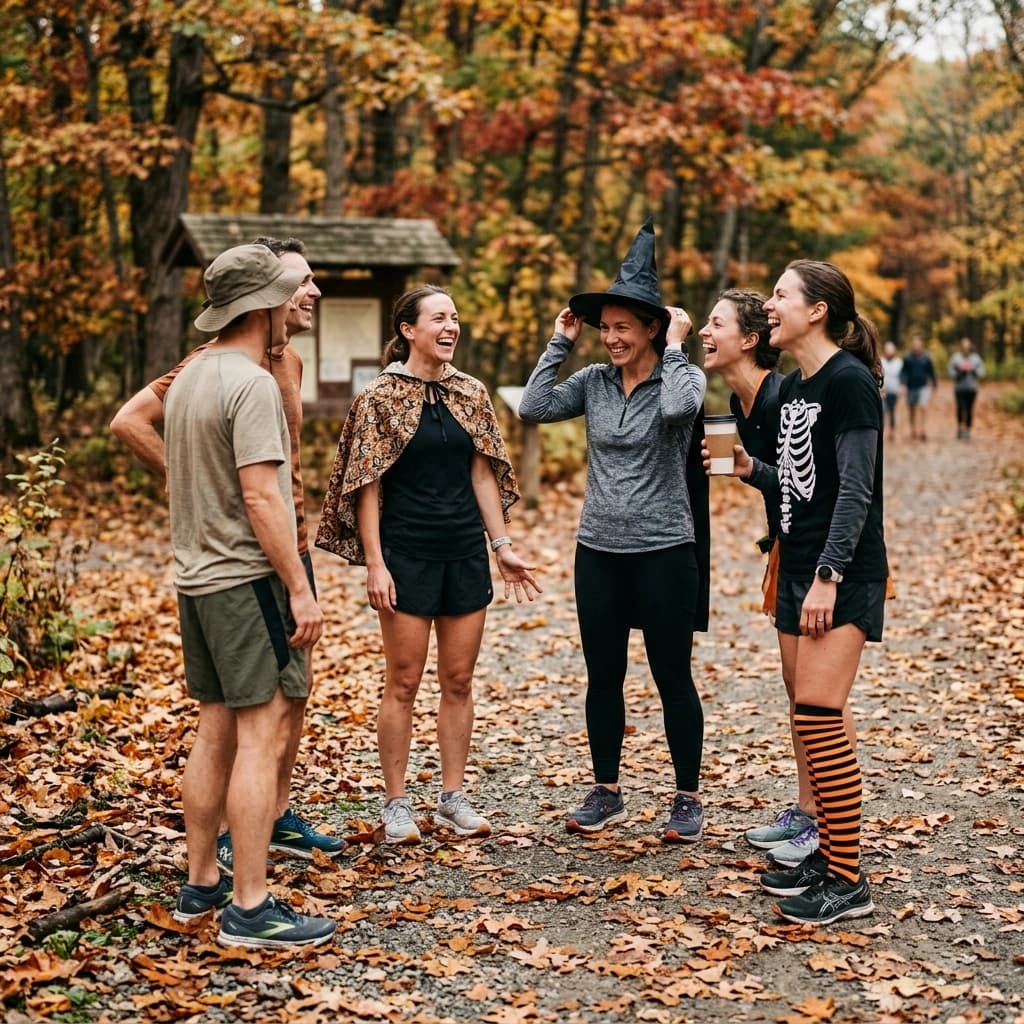
Every October somebody in the group chat says it. "We should do a costume run." Twenty people react with a pumpkin emoji. Then the actual questions land on you, the person who runs the club: what time, which route, what about masks, who is bringing the friend they keep talking about, and what happens the week after.
This post is for the founder, captain or social lead who owns that run. It is not a costume guide and it is not about your pace. It is about the handful of decisions that turn a fun Saturday into the best recruiting run of your year, the same work you do all season when you think about growing your club.
How do you plan a Halloween run club event?
Plan a Halloween run club event the way you would plan any recruiting event: pick the time and route about four weeks out, publish three simple costume rules, name a run leader and a sweep, make it an explicit bring-a-friend run, and schedule the follow-up before the run happens. The costume is the easy part. The decisions around it are what make it a club event instead of a group photo.
Why is Halloween 2026 a good night to recruit for a running club?
Start with the calendar. Halloween falls on Saturday, October 31, 2026. No weeknight rush, no one sprinting from work, and families are already planning to be out. It is also the last weekend group run before the clocks change: according to the Farmers' Almanac, daylight saving time ends at 2:00 a.m. local time on Sunday, November 1, 2026 (Hawaii and most of Arizona do not change their clocks).
Then look at who is already in the mood. The National Retail Federation's annual Halloween survey, released September 22, 2026, found that 74 percent of consumers plan to celebrate this year, and dressing in costume (50 percent) ranks among the top ways people plan to mark it. The survey of 7,889 consumers was conducted by Prosper Insights and Analytics from September 1 to 9. The same release says 49 percent of consumers planned to begin Halloween shopping in September or earlier, which is your argument for announcing the run now instead of in mid October. People lock in their Halloween plans early.
The bigger reason is what a costume run removes. Ask a non-runner why they have never come to a club run and you tend to hear two things: they are worried about being too slow, and they do not know anyone. A costume run quietly deletes both. Nobody is timing anything. Nobody expects the witch in the long skirt to hold a pace. And a costume is an instant conversation starter with strangers. For a curious friend, it is the lowest-stakes first run your club offers all year.
Should a costume run start in the morning or at dusk?
Because Halloween is a Saturday this year, you have a real choice. Make it once, early, and say why.
Morning run. Full daylight, easy for families and strollers, no conflict with trick-or-treating, and it leaves members free for their own plans that night. The trade-off is less atmosphere.
Dusk run. Lanterns, glow sticks, and the feel of an event. The trade-off is real: your route shares sidewalks with small children in costume, drivers are watching for trick-or-treaters and not for a pack of runners, and it is dark by the finish. If you pick dusk, your club's dark season standards apply a week early. Our post on running club night run safety covers how to set those, so link your own rules on the event rather than rewriting them.
Whichever slot you pick, keep the route off residential streets that will be busy with trick-or-treaters. For most clubs, the morning run is the better recruiting run. Guests can bring kids, the coffee afterward is easy, and nobody has to leave early for a party.
What costume rules should a running club set?
Costume rules are organizer policy, not a gear review. Three lines on the event listing beat a debate in the group chat:
- You can see. If a mask or hood blocks your peripheral vision, wear it for the photo and carry it for the run.
- You can be seen. Dark costumes need something bright or reflective, especially at dusk.
- Nothing drags. Capes, tails and long skirts get shortened or pinned so nobody trips the runner behind them.
Then answer the questions first-timers will not ask out loud. Can I bring my dog? A stroller? My kids? Is it fine to come without a costume? (Yes. Say so plainly, because the person who hates costumes is still a potential member.) Decide your answers once and put them on the event.
If you want a costume prize, keep it simple: name who judges, pick one or two categories, and keep the whole thing free. The moment an event involves entry fees, somebody has to handle money, and that is not a job you want on a recruiting run.
Which route works for a Halloween group run?
Short and looped. Two to three miles is plenty, with an explicit no-drop promise and a named sweep, so a friend in a costume never finishes alone. A loop also means nobody gets stranded at a turnaround with a broken wing.
Two more choices matter more than the distance:
- One planned photo stop. Pick the spot in advance, somewhere with room to gather off the path. The group photo is the thing guests share, and it is free promotion for your next run.
- A finish where people can stay. A coffee shop in the morning, a patio at dusk. The half hour after the run is where a guest decides whether to come back, because it is where they talk to your regulars instead of just running near them.
Publish the route on the event itself, not in a chat thread. A guest wants to see where the run goes before they commit, and an organizer does not want to answer "where are we meeting?" nine times. If you want a refresher on why a posted route matters, see our guide to running club route maps.
How do you turn Halloween first-timers into members?
This is the part most clubs skip, and it is the part that decides whether the costume run grows the club or just fills a camera roll.
Ask members to bring one person, by name. An open "bring your friends!" post gets a pumpkin emoji. A captain saying "Sam, bring your neighbor who keeps asking about the club" gets a guest. Personal asks are how clubs actually grow.
Know who is coming. Collect RSVPs in advance so your run leaders know how many guests to expect. At the start, introduce each guest to one regular who will run near them. That single introduction does more than any welcome speech.
Follow up within the week. The invitation to the next regular run should go out while the costume photos are still circulating. Here is the catch in 2026: that next run is the first one on standard time. If your weekday run meets at 6 p.m., it will now be dark. Send the dark season details with the invitation: the day, the time, the meeting point and the route, so a guest is not surprised by a headlamp run after a sunny Saturday. We go deeper on this in converting run club first-timers into members and on the first few weeks in running club new member onboarding.
Where RunLink fits
The usual tool stack scatters one Halloween run across a group chat thread, an Instagram story and a sign-up form, so a guest sees three versions of the start time. In RunLink, the run is one club event with RSVPs and a mapped route drawn right on the event, your club chat carries the day-of updates, and a guest can look at your public club page before they show up. Members can also invite people from their phone contacts straight into the club, so "bring one person" becomes something every member can act on, not only the founder.
To be clear about the boundaries: RunLink does not take payments or entry fees, collect waivers, check people in, or send automated reminders, and an invite brings a person into the club rather than to one specific event. The follow-up is still a person making an ask. RunLink just keeps the event, the route and the conversation in one place.
Halloween run club event FAQ
How far should a costume run be? Short, looped and no-drop. Two to three miles works for most clubs, with a sweep at the back and a photo stop in the middle.
Do we need a permit? A club's regular group run on public paths usually runs the way it always does. Anything bigger, like a closed course, amplified music, or selling food or merchandise, is a question for your city or parks department. This is general information, not legal advice.
Should we charge for it? No. It is a recruiting run. Keep it free so the only thing a guest has to decide is whether to show up.
What if it rains? Decide the call time and where the update gets posted, once, and put both on the event. "We run unless there is lightning, and any change posts in the club chat by 7 a.m." saves you a morning of individual messages.
Plan the run, then plan the week after
A Halloween run club event is a recruiting event wearing a costume. Pick your slot, post three costume rules, publish a short looped route with a sweep, ask every member to bring one named person, and have the next invitation ready before anyone takes off the cape. Do that, and some of the people who came for the costumes will still be showing up in January.
If your club's events, RSVPs, routes and chat still live in four different apps, RunLink puts them in one place, built for the person running the club. The iOS app is live on the App Store and free to download.
Related Posts
Running Club Event Ideas: Building a Calendar That Turns the Boom Into Regulars
Running club event ideas for organizers: beginner runs, themed nights, socials, and signature events that turn the run club boom into members who stay.
Running Club Marketing Ideas: How to Ride the Run Club Boom Instead of Waiting for Word of Mouth
Practical running club marketing ideas for organizers: turn the run club boom into real members with word of mouth, local store partnerships, and events.